

Spirax Sarco steam traps help remove condensate, air and other non-condensable gases from steam systems while minimising live steam loss and supporting condensate recovery back to the boiler house.
Use this page to compare steam trap types, including thermodynamic, ball float, balanced pressure thermostatic, bimetallic, fixed temperature discharge and inverted bucket designs, then move into steam trap selection, monitoring, surveys and standardised maintenance routes.
For most buyers, the core questions are practical: which steam trap type best fits the duty, when should steam trap monitoring be introduced, how should the installed trap population be managed, and where do connectors, surveys and condensate recovery fit. This page is structured to answer those questions quickly and then route you deeper into the right product family or support path.
Overview
What is a steam trap? A steam trap is an automatic valve that discharges condensate, air and other non-condensable gases from a steam system while helping prevent the escape of live steam. How do you choose a steam trap? Steam trap selection should be based on the duty rather than on connection size alone. Condensate load profile, start-up air release, differential pressure, backpressure, operating pressure, risk of waterhammer, ambient exposure and maintenance access all influence which trap family will perform best. Which steam trap types are most common? For most buyers, the first comparison is between thermostatic steam traps, mechanical steam traps and thermodynamic disc traps. Balanced pressure, bimetallic and fixed-temperature discharge designs serve different thermostatic duties, while ball float and inverted bucket types cover core mechanical steam trap applications. When should connectors, manifolds and trap stations be part of the decision? Maintenance strategy often changes the best route. Sites that want faster steam trap replacement and less on-site fabrication often standardise around Quick-Fit connectors, trapping stations and manifolds rather than treating every trap assembly as a one-off arrangement. Why do monitoring, surveys and management matter? A failed-open steam trap can waste steam continuously, while a failed-closed trap can create waterlogging, poor heat transfer and waterhammer. Survey-led steam trap management identifies the installed trap population, checks application and installation suitability, and uses in-operation testing to prioritise corrective work. Wireless monitoring adds continuous condition visibility so maintenance teams can detect failure trends earlier and respond with better prioritisation. Why does steam trapping connect to the wider system? Trap choice affects condensate drainage, flash steam generation, heat transfer stability, maintenance labour and the quality of condensate returned to the boiler house. For that reason, steam trap selection often sits alongside condensate recovery, pressure control and broader steam-system optimisation decisions.
How to choose the right steam trap route
Steam trap selection becomes easier when the project starts with operating duty, air venting need, maintenance access and failure-detection strategy rather than with connection size alone. The main questions are whether the application needs continuous condensate discharge, compact all-round performance, controlled sub-cooled discharge or a maintenance route that is easier to standardise across the site.
| Route | Best fit when | Main priority | Next route |
|---|---|---|---|
| Thermodynamic disc steam traps | Steam mains, tracing or general high-pressure duty need compact and robust drainage | Durability and broad operating range | Browse thermodynamic steam traps |
| Ball float and F&T steam traps | Continuous condensate discharge and strong air venting matter most | Stable drainage for process and heat-transfer duties | Browse ball float steam traps |
| Balanced pressure and other thermostatic traps | Start-up air release and controlled sub-cooled discharge are major selection drivers | Thermostatic response and reduced flash steam loss | Browse balanced pressure steam traps |
| Inverted bucket and other mechanical traps | A durable mechanical design is preferred for general industrial duty | Mechanical trap performance and application fit | Browse inverted bucket steam traps |
| Monitoring and connector routes | Condition visibility or faster maintenance standardisation matters as much as trap family choice | Reduce steam loss and simplify maintenance execution | Explore monitoring and connectors |
When surveys, monitoring and management should be added
Steam trap management is not only about replacing failed units. It starts with identifying the installed trap population, checking whether each trap is correctly selected and installed, and deciding where faster maintenance or continuous monitoring will create the biggest operational value.
| Need | Why it matters | Best next route |
|---|---|---|
| Steam trap surveys | Used when the installed trap population must be recorded, reviewed in operation and prioritised for corrective work. | Explore steam trap surveys and management |
| Wireless monitoring | Used when earlier detection of leaking or blocked traps matters more than periodic manual checking alone. | Explore wireless steam trap monitoring |
| Standardised trap stations | Used when the maintenance team needs faster change-out, less fabrication work and repeatable station layouts. | Browse swivel connectors and trap stations |
| Condensate recovery planning | Used when trap performance must be considered together with returned condensate value, flash steam control and wider boiler house efficiency. | Explore condensate and heat recovery systems |
Common steam trap selection questions
What does a steam trap do?
A steam trap is an automatic valve that removes condensate, air and other non-condensable gases from a steam system while helping prevent the loss of live steam.
Which steam trap type is best for continuous condensate discharge?
Ball float and float and thermostatic steam traps are commonly chosen where continuous condensate discharge and strong air venting are priorities, especially on process and heat-transfer duties.
When should thermodynamic steam traps be used?
Thermodynamic disc steam traps are often used for steam mains, tracing and other duties where compact size, durability and broad pressure capability matter more than continuous discharge behaviour.
When should steam trap monitoring be added?
Monitoring becomes valuable when the site needs earlier failure detection, reduced steam loss and a more proactive maintenance routine across a larger installed trap population.
Typical routes from common steam trap searches
Broad steam trap searches usually narrow around discharge behaviour and application fit. Start with float and thermostatic steam traps when continuous condensate removal and strong air venting are the main priorities. Use thermodynamic steam traps for steam mains, tracing and compact higher-pressure duties.
If the project depends on controlled sub-cooled discharge or stronger start-up air release, compare balanced pressure steam traps. Where a durable mechanical route is preferred for general industrial service, review inverted bucket steam traps. When trap choice is being assessed together with return-line performance, continue into condensate recovery systems.

BPC32YCV carbon steel balanced pressure steam trap
BPC32YCV is part of the Spirax Sarco BPC32 family of carbon steel balanced pressure thermostatic steam traps. This page is designed for users who need a direct BPC32YCV route for document download, installed-base checking and family-level replacement review when a sub-model does not have a standalone technical leaflet.

Spirax Sarco MST21 Stainless Steel Balanced Pressure Steam Trap
The Spirax Sarco MST21 is a maintainable stainless steel balanced pressure thermostatic steam trap for tracing lines and small condensate discharge duties. It uses a balanced pressure bellows mechanism that adjusts the discharge temperature automatically in response to steam pressure changes and provides effective air venting during start-up. The standard MST21 covers tracing line duties while the MST21H high capacity variant is available for heavier applications.

Spirax Sarco FT14 Ball Float Steam Trap
The Spirax Sarco FT14 ball float steam trap is a model-specific product path inside the ball float steam trap range for users who already know FT14 and need a faster path into connection format, pressure class and replacement boundaries.

Spirax Sarco FT43 Ball Float Steam Trap
The Spirax Sarco FT43 ball float steam trap is suited to flanged connections, larger sizes and higher condensate loads in heat exchanger and process drainage duties.

Spirax Sarco FTGS14 Ball Float Steam Trap
The Spirax Sarco FTGS14 ball float steam trap uses stainless steel construction for continuous drainage duties where corrosion resistance and compact installation are important.

TD32F flanged thermodynamic steam trap
TD32F is a maintainable thermodynamic steam trap for medium-pressure steam systems. It uses flanged connections, includes an integral strainer and covers standard TD32F, LC low-capacity and A anti-air-binding disc routes.

TD52 thermodynamic steam trap
The TD52 route is the model-level entry for users searching TD52, TD52M or adjacent replacement variants inside the Spirax Sarco thermodynamic steam trap family. Current documentation centres on the maintainable stainless steel TD52M range for steam mains and other relatively small condensate duties.
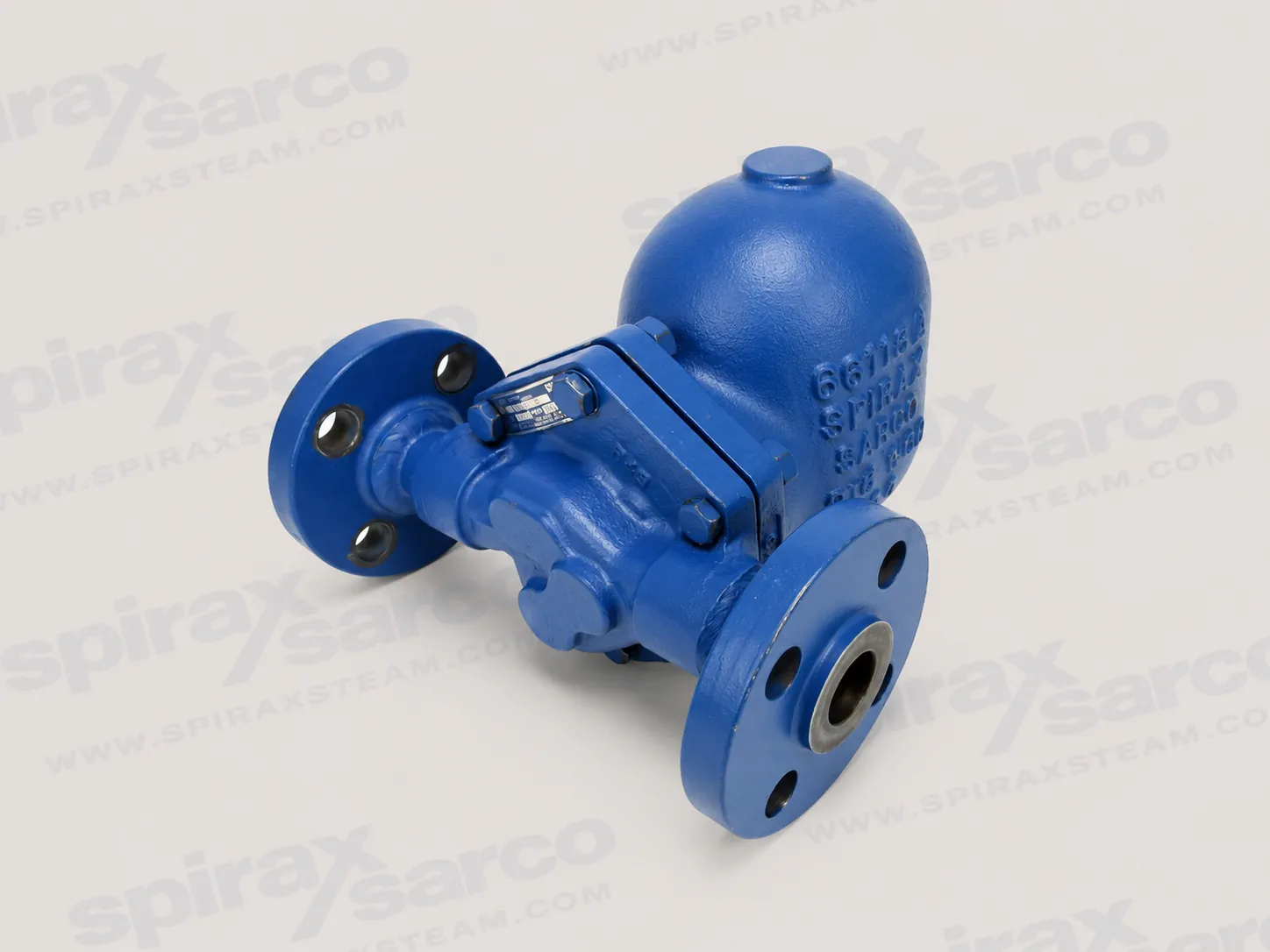
FT450 Float and Thermostatic Steam Trap
Cast steel float and thermostatic steam trap for continuous condensate removal, with internal air removal and size-specific pressure-temperature limits.
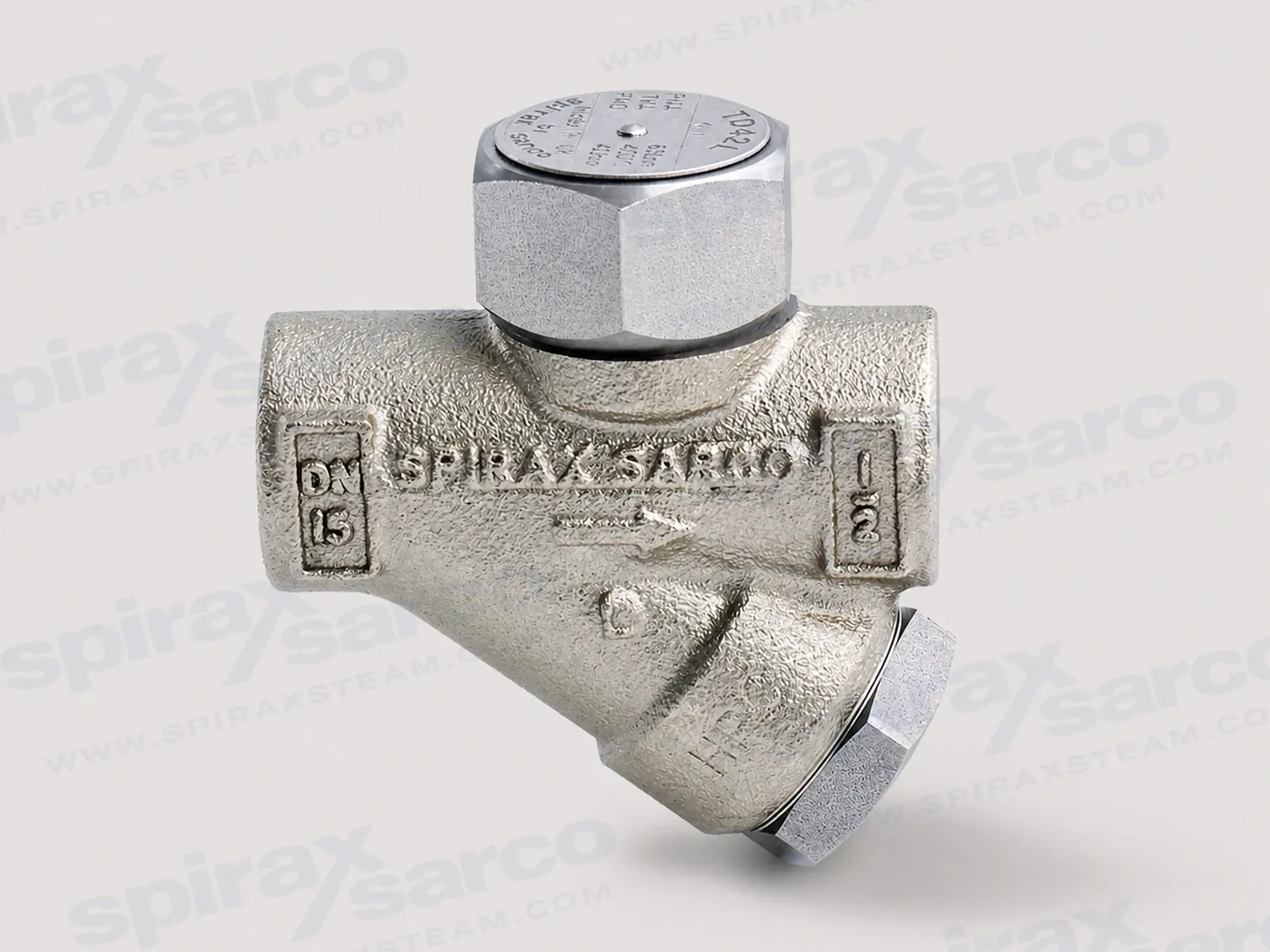
TD42 Thermodynamic Steam Trap
TD42 is a maintainable thermodynamic steam trap with an integral strainer and screwed connections for steam, air or condensate/water service within its documented pressure, temperature, differential-pressure and backpressure limits.
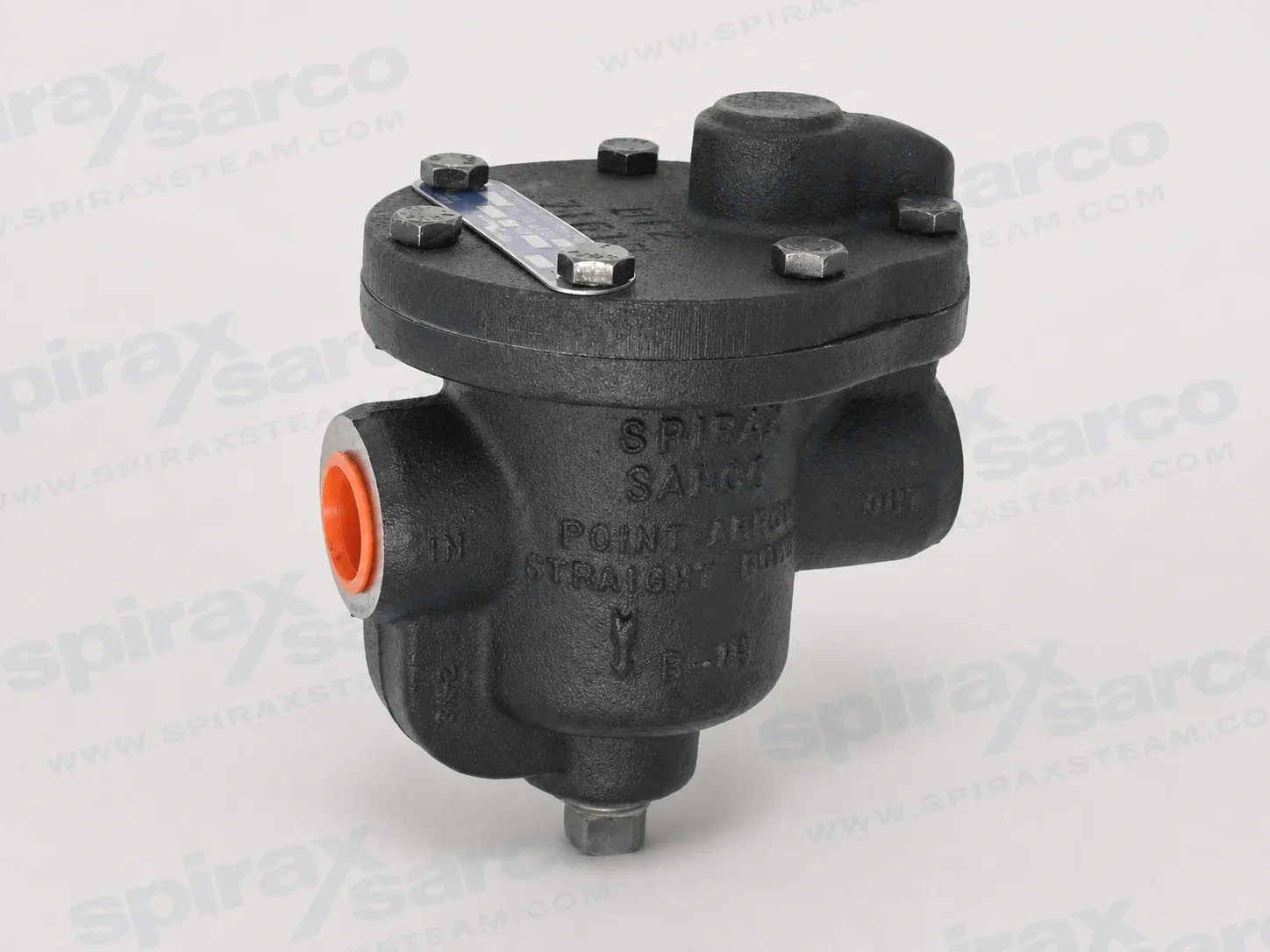
B1H Inverted Bucket Steam Trap
B1H is a maintainable cast iron inverted bucket steam trap for 1/2 inch and 3/4 inch screwed NPT connections, with stainless steel mechanism and bucket, optional air vent and strainer, and pressure-range selections up to 250 psig.
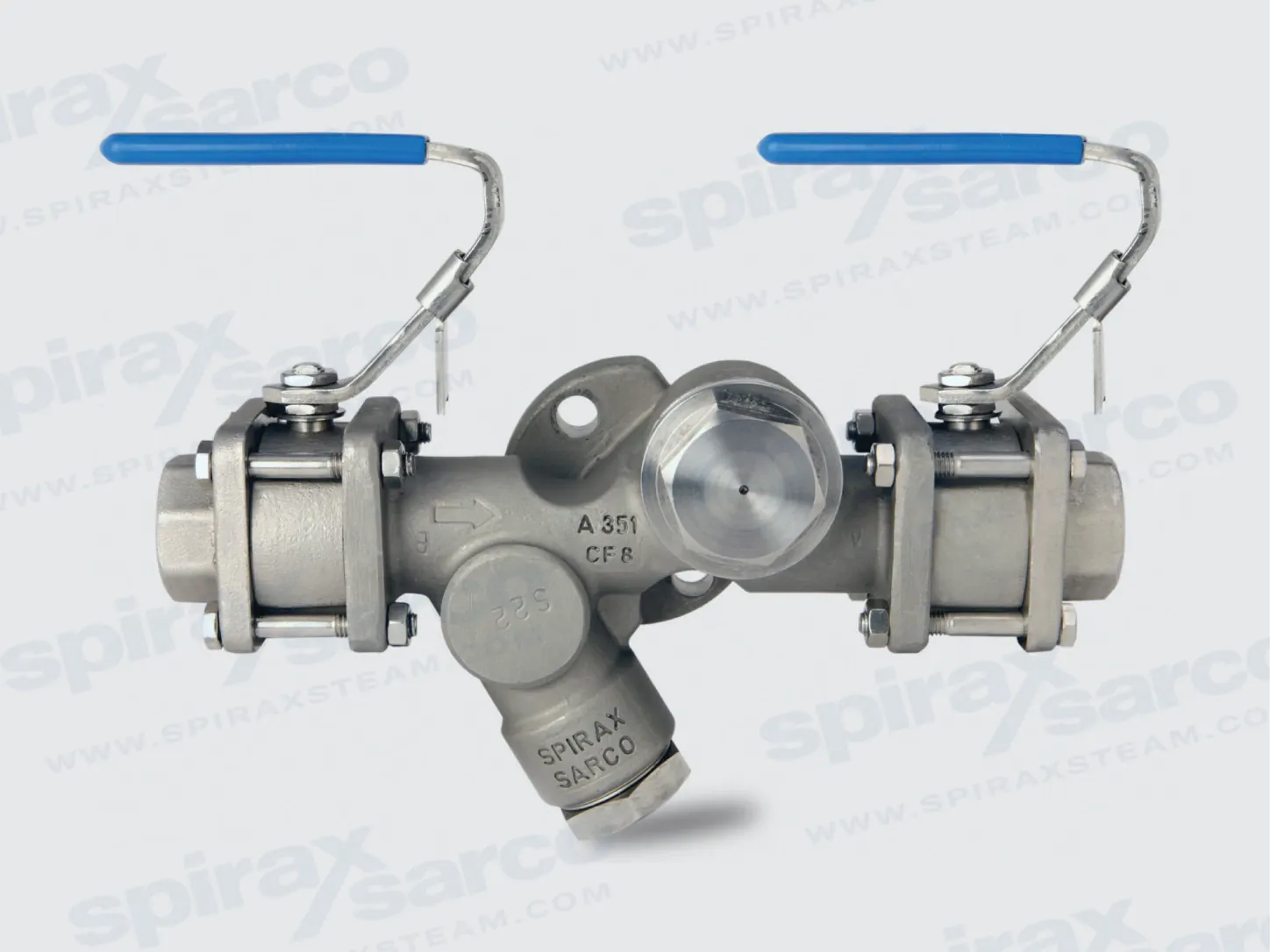
STS17.2 Compact Pipeline Connector Steam Trapping Station
STS17.2 is a stainless steel compact pipeline connector steam trapping station with pre-assembled isolation, an integral strainer and Quick-Fit maintenance access for a separately selected steam trap within its documented pressure, temperature and installation limits.
TD42L Thermodynamic Steam Trap
TD42L is a maintainable thermodynamic steam trap for relatively small condensate loads, with an integral strainer, screwed BSP T Rp or NPT connections, and an ENP body surface for steam mains drainage and lower-capacity tracing applications.
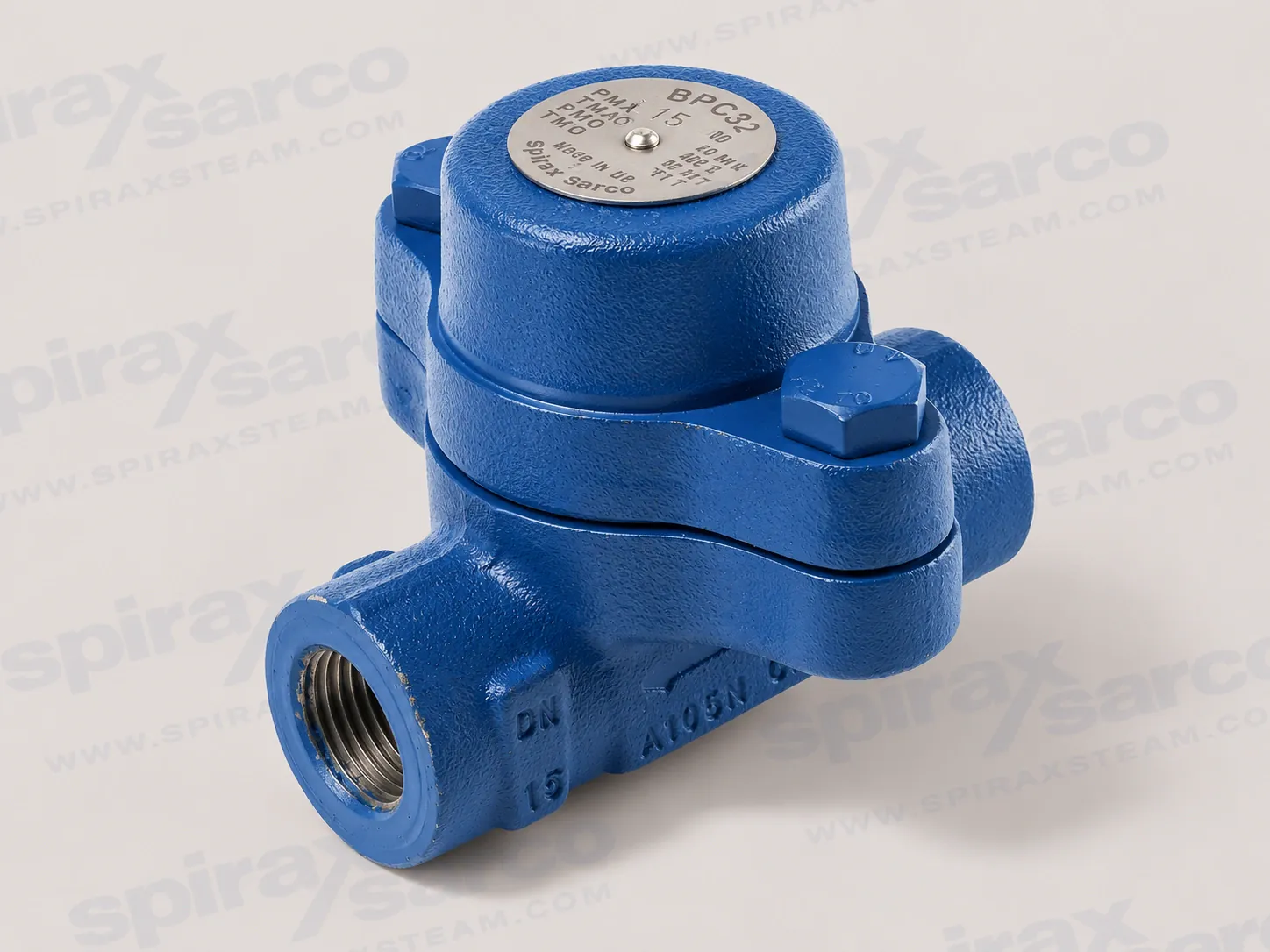
BPC32 Balanced Pressure Thermostatic Steam Trap
BPC32 is a carbon steel, maintainable balanced pressure thermostatic steam trap with straight connections and an integral flat strainer screen for steam, air or condensate/water in its documented Group 2 applications.
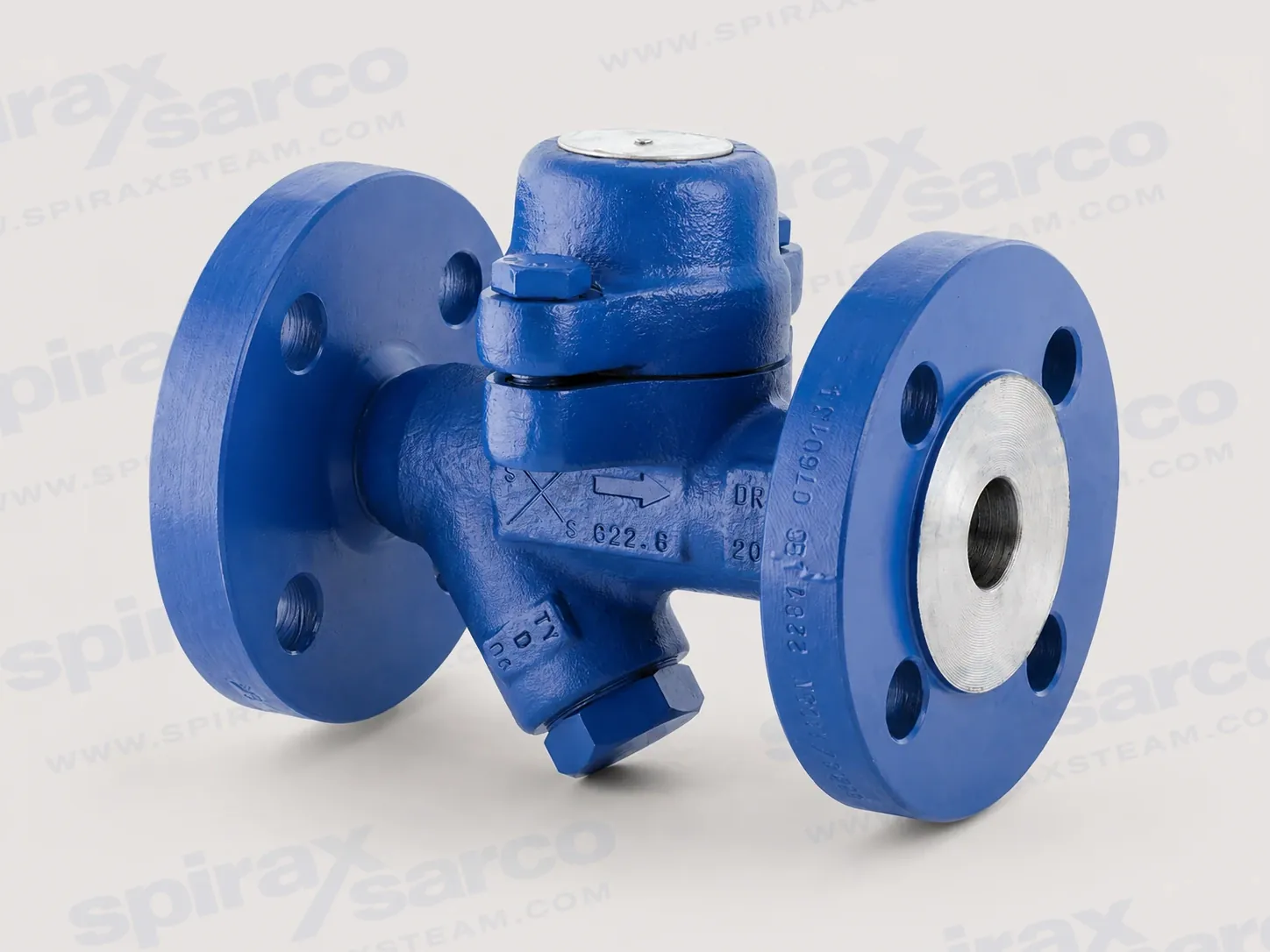
BPC32Y Balanced Pressure Thermostatic Steam Trap
BPC32Y is a maintainable carbon steel balanced pressure thermostatic steam trap with straight connections and an integral cylindrical Y-type strainer for documented steam, air and water/condensate service.
TD42S2 Thermodynamic Steam Trap
TD42S2 is a maintainable thermodynamic steam trap with a forged steel body, socket weld ends and an integral stainless steel strainer for documented steam, air or condensate/water service. Lower-capacity TD42S2LC versions are available for mains drainage and tracing.
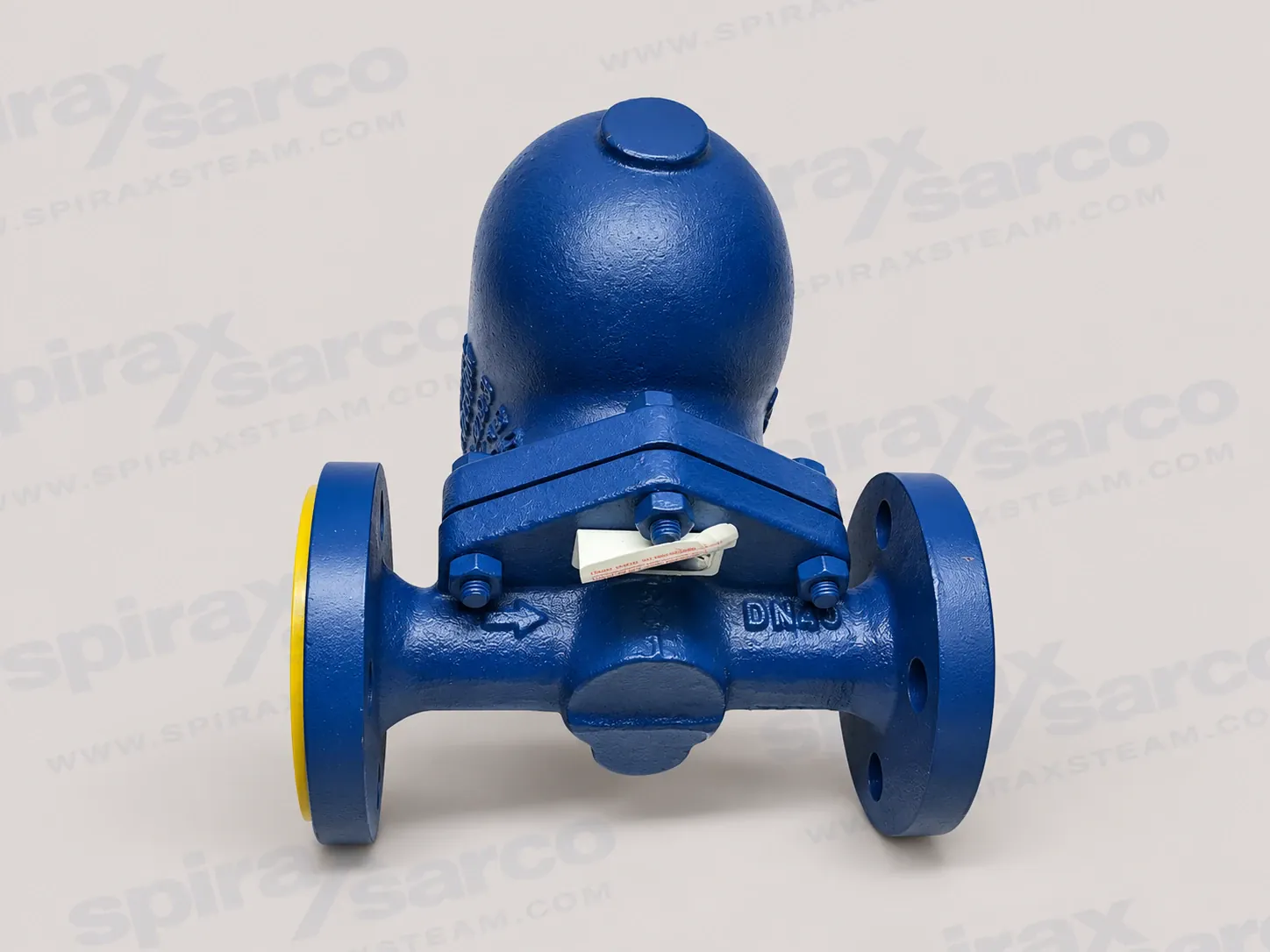
FT44 Carbon Steel Ball Float Steam Trap
FT44 is a carbon steel flanged ball float steam trap with stainless steel working internals, automatic air venting and in-line maintainability for documented steam and condensate duties across DN15-DN50 and DN80-DN100.
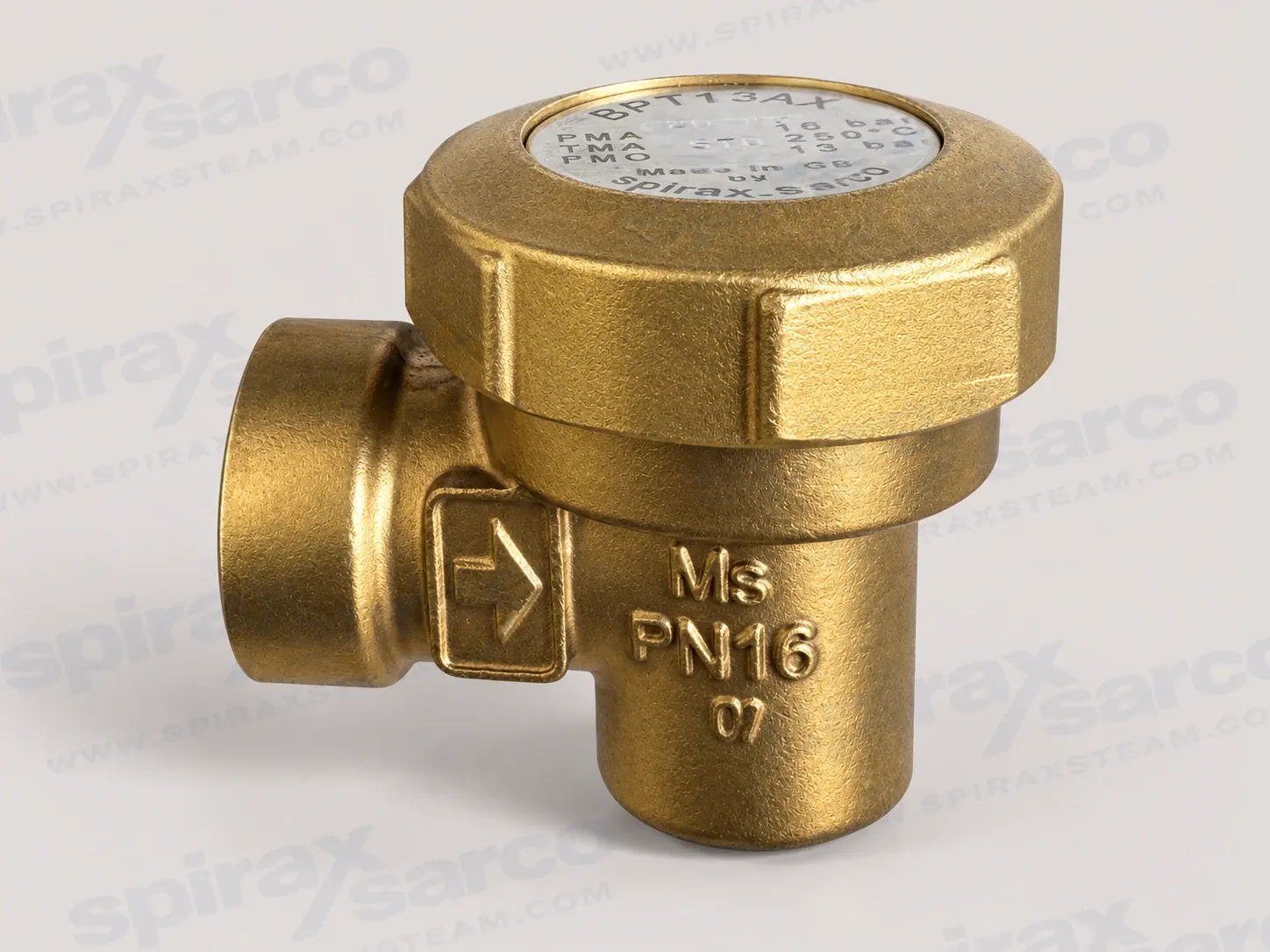
BPT13 Balanced Pressure Thermostatic Steam Trap
BPT13 is a maintainable brass-bodied balanced pressure thermostatic steam trap with screwed BSP or NPT connections for documented steam, air or water/condensate service within its pressure, temperature and differential-pressure limits.
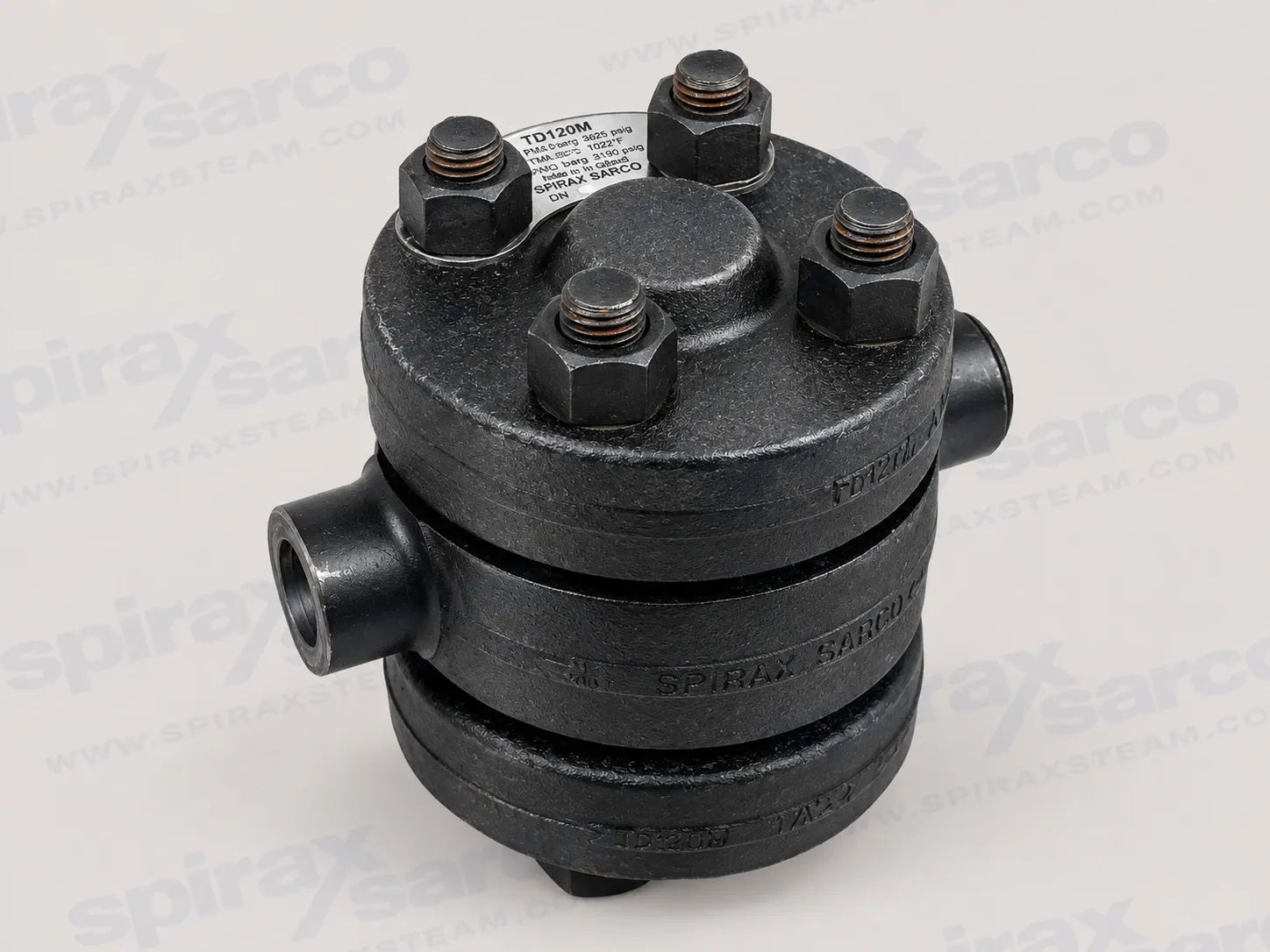
TD120M High Pressure Thermodynamic Steam Trap
TD120M is a maintainable high-pressure thermodynamic steam trap with an integral strainer and replaceable seat for low-capacity superheated steam main drainage, with documented pressure and temperature conditions up to 250 bar g.
Continue your steam trap selection and system optimisation
Steam trap selection usually sits between trap type choice, maintenance planning, site-wide failure visibility and wider condensate-system performance. Use these routes when you need more than a product-family list.
Connect trap choice with condensate recovery
Steam trap choice also affects condensate recovery, flash steam control and boiler house efficiency. Use this route when the wider condensate loop matters as much as the trap itself.
Connect steam traps with monitoring
Move into monitoring when your priority is detecting leaking or blocked traps earlier, reducing steam loss and building a more proactive maintenance plan.
Use steam trap selection and application guidance
Read the engineering guidance when you need a steam trap selection guide covering operating conditions, trap characteristics and application fit before choosing a product family.
Review testing and maintenance guidance
Go to the maintenance guidance when your next question is how to test steam traps, detect failure modes and build a more disciplined inspection routine.