

Overview
Automatic TDS blowdown controls help keep dissolved solids in boiler water within the target range by monitoring conductivity and adjusting blowdown automatically against a setpoint. That matters because excessively high TDS can increase carryover risk and upset steam quality, while excessively low TDS can waste heat, treated water and chemical cost through unnecessary blowdown. Spirax Sarco TDS blowdown control systems provide continuous boiler water quality management rather than relying on periodic manual intervention alone. They are typically built around controllers, conductivity probes and blowdown valve assemblies that work together to reduce avoidable fuel and water loss while supporting stable boiler chemistry. These systems are especially valuable where boiler load varies through the day and manual blowdown routines are too inconsistent to maintain efficient control. They are also a practical route for sites that want clearer, more repeatable boiler water control without depending on frequent operator intervention.
Related dissolved-solids control routes
Automatic TDS management depends on both measurement and downstream handling. Pair the controller package with conductivity meters when the measurement scope is widening, and use blowdown vessels when the discharged hot water must be handled more safely.
If the project also wants to reclaim energy from the controlled blowdown stream, continue into boiler blowdown heat recovery systems.

BC3150 Boiler Blowdown Controller
The BC3150 is a Spirax Sarco boiler blowdown controller for steam boilers. It uses conductivity probe input to control the blowdown valve and supports Pt100 temperature compensation, 4-20 mA output, infrared communication and pulse blowdown.

BC3250 Boiler Blowdown Controller
The BC3250 is a Spirax Sarco boiler blowdown controller for steam boilers that monitors boiler water TDS and drives blowdown action automatically while also handling bottom blowdown timing, retransmission, trend display and Modbus communications.

CP30 Conductivity Probe
The CP30 is a Spirax Sarco conductivity probe for steam boiler TDS monitoring and blowdown control systems. The probe can be cut to the required insertion length and installed in a probe elbow, threaded flange or boiler connection.
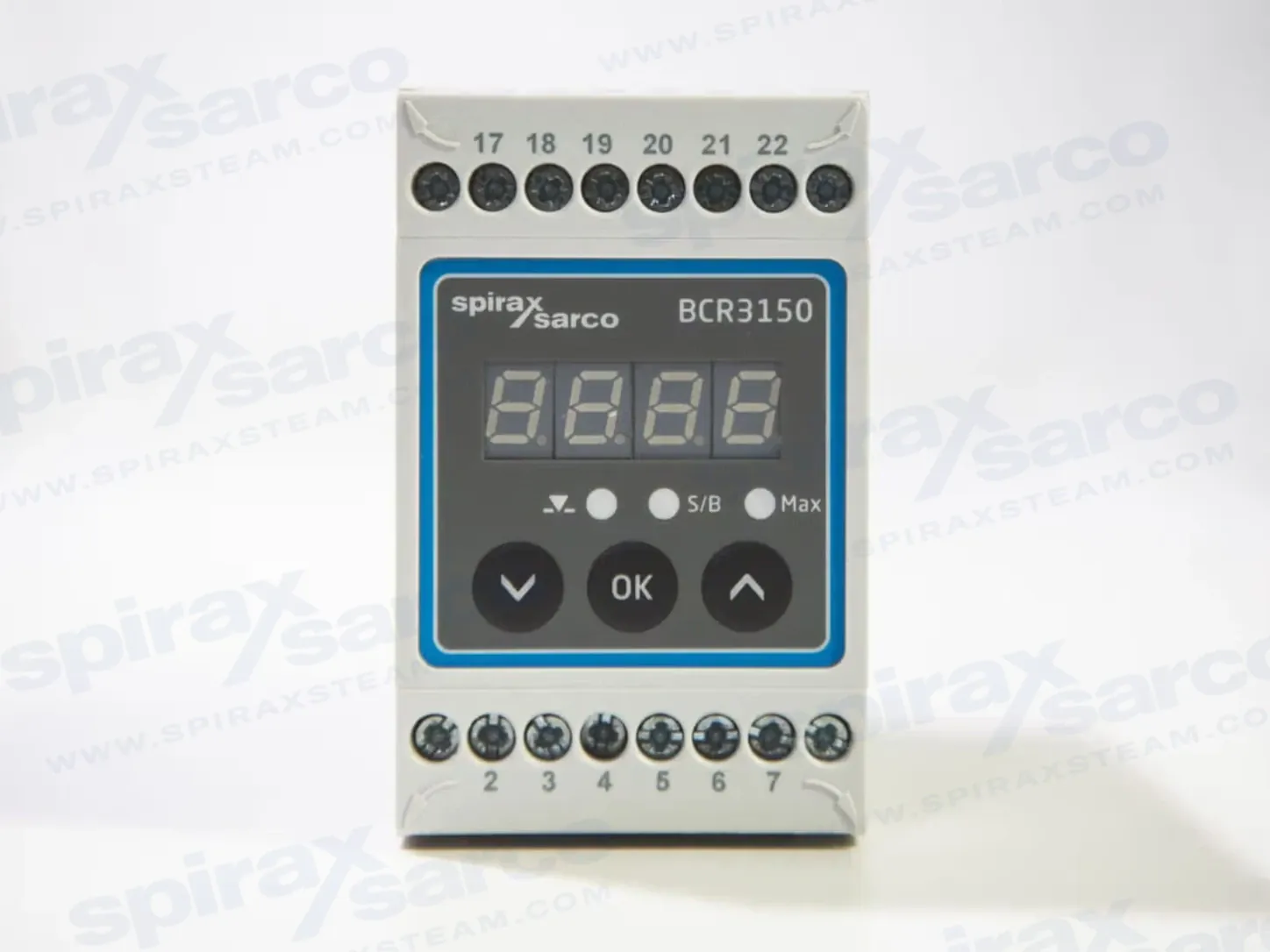
BCR3150 TDS Blowdown Controller
BCR3150 is a 24 Vdc conductivity-based TDS blowdown monitor and limiter for boiler-water control and compatible conductive condensate-contamination monitoring systems.
Continue your boiler water quality control project
Automatic TDS control works best when measurement, safe blowdown handling and energy recovery are considered together rather than as separate projects.
Support blowdown control with conductivity measurement
Use conductivity meters when the immediate need is conductivity measurement, feedwater checking or instrumentation calibration alongside automatic TDS control.
Recover value from controlled blowdown
Review heat recovery systems when the blowdown stream should be turned into an energy-saving opportunity rather than sent directly to drain.
Add safer blowdown discharge hardware
Go to blowdown vessels when the priority is safe downstream handling of the hot blowdown water discharged by the control system.