APT14 automatic pump-trap
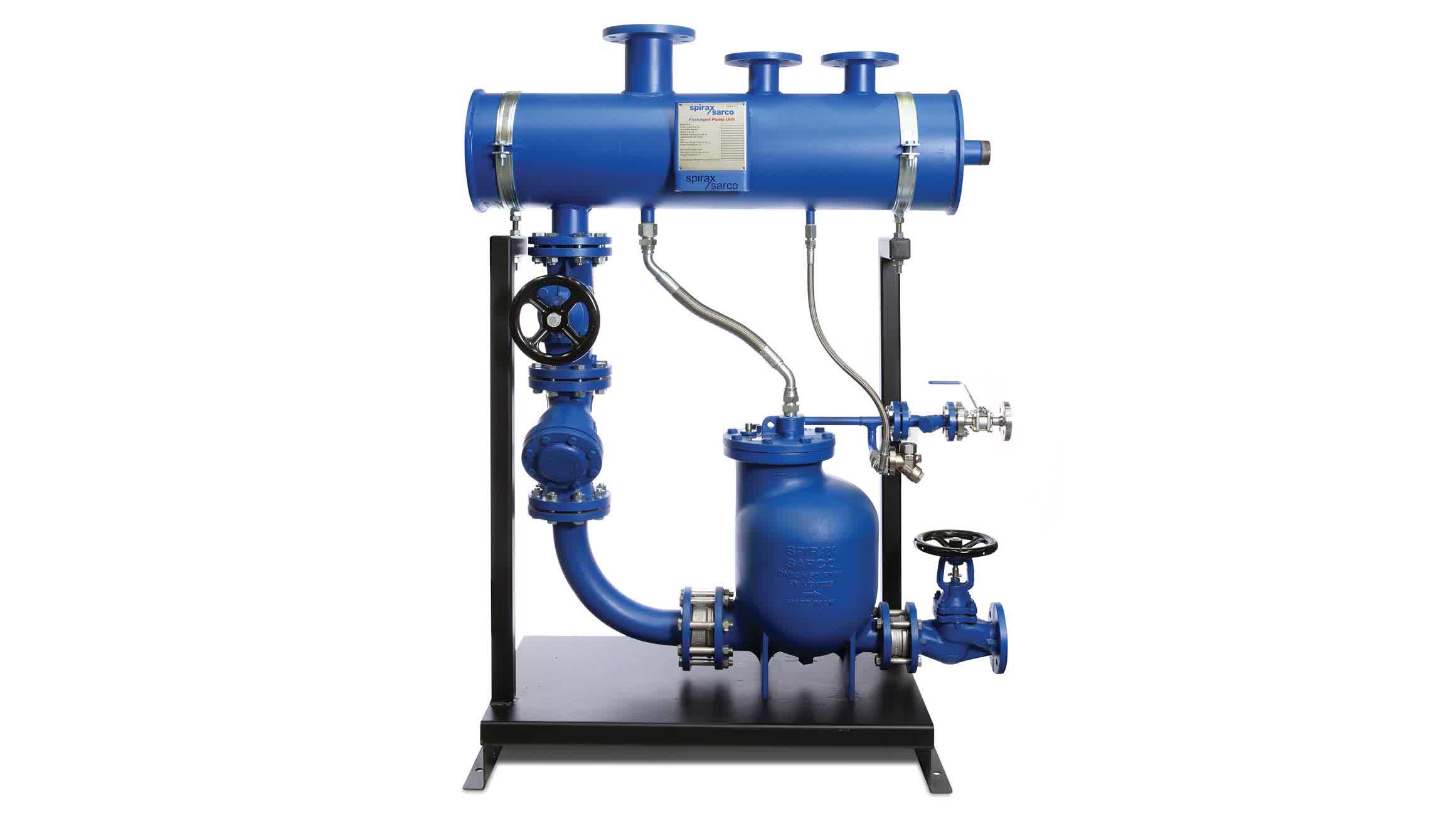
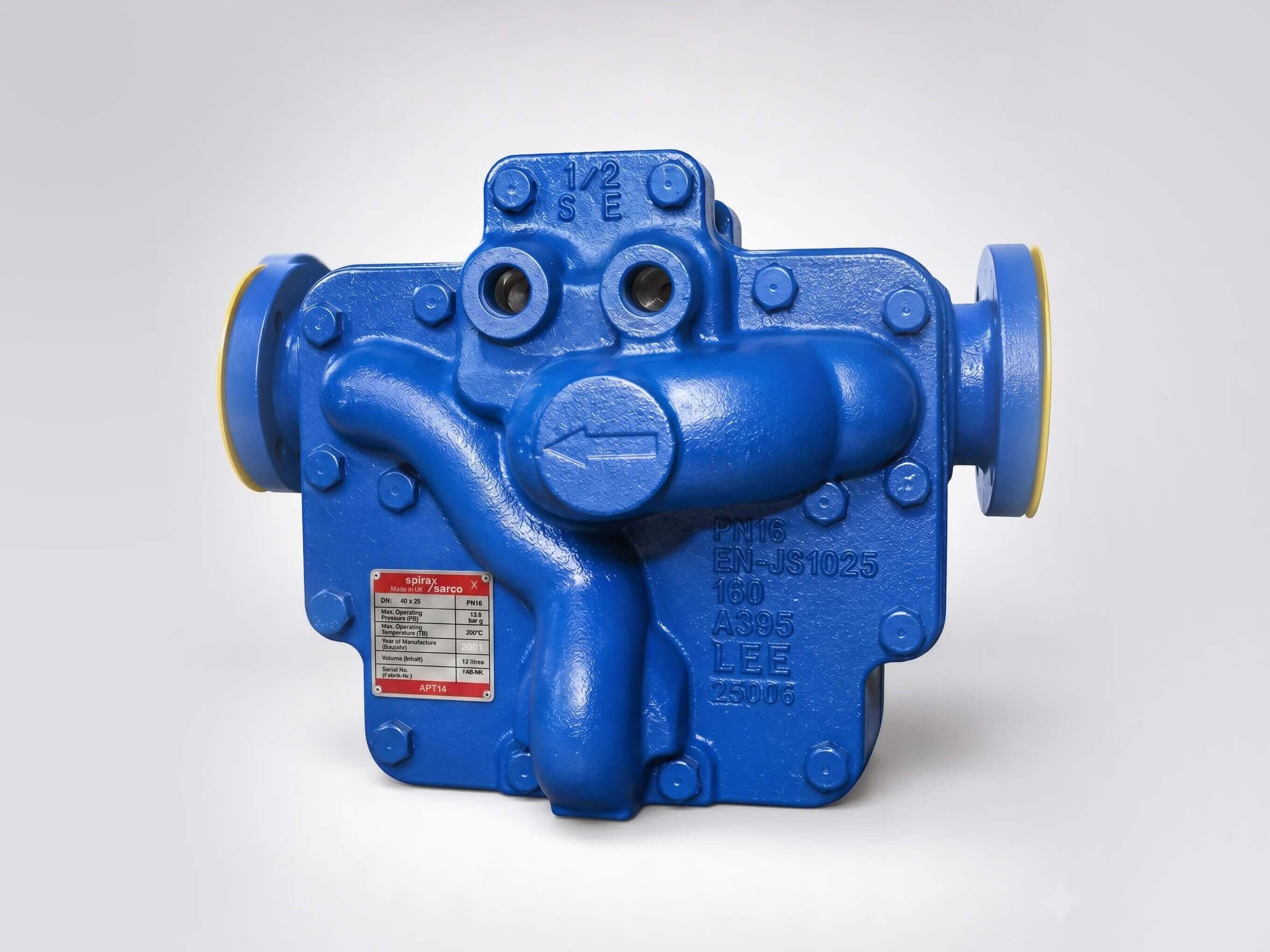
APT14 is a Spirax Sarco automatic pump-trap that drains continuously when pressure is available and switches to pressure-powered pumping when backpressure or vacuum prevent ordinary trap discharge.
Explore Spirax Sarco condensate pumps, pump traps and condensate recovery systems, including mechanical condensate pumps and electrical condensate pumps.
Condensate recovery selection becomes easier when the project starts with operating condition rather than pump type alone. The main decision is whether the condensate can still discharge by trap action, or whether stalled conditions and return-line pressure now require a pump-based solution.
| Recovery route | Best fit when | Main selection priority | Next route |
|---|---|---|---|
| Mechanical condensate pumps and pump traps | Differential pressure collapses, backpressure rises or vacuum conditions stop normal trap drainage | Reliable drainage without electric motors, especially with very hot condensate or difficult installations | Browse mechanical condensate pumps |
| Electrical condensate pumps | Larger condensate volumes must be returned from receivers or collection systems | Higher-volume pumped return for boiler or process feedwater reuse | Browse electrical condensate pumps |
| Standard steam traps | Normal differential pressure is still available and active pumping is not required | Efficient condensate discharge without adding pump complexity | Browse steam traps |
Condensate recovery searches usually narrow once the user identifies whether the problem is stalled drainage or straightforward pumped return. Use pressure powered pumps when low differential pressure, backpressure or vacuum stop normal trap discharge. Compare electric condensate pumps when the duty is a larger receiver-based return arrangement.
If ordinary drainage is still possible, check steam traps before adding pump complexity. When the recovered condensate is being integrated into the wider boiler house, review deaerators and the surrounding boiler controls that govern reuse on the feedwater side.
APT14 is a Spirax Sarco automatic pump-trap that drains continuously when pressure is available and switches to pressure-powered pumping when backpressure or vacuum prevent ordinary trap discharge.
MFP14 is a Spirax Sarco automatic condensate pump with a ductile iron body that uses steam or compressed air to lift condensate and other liquids where ordinary trap drainage is limited by backpressure, vacuum or low differential
APT14HC is a flanged PN16 automatic pump trap with an SG iron body, DN50 x DN40 process connections and 8 litres nominal discharge per cycle for pressure-powered condensate removal under changing pressure or vacuum conditions.
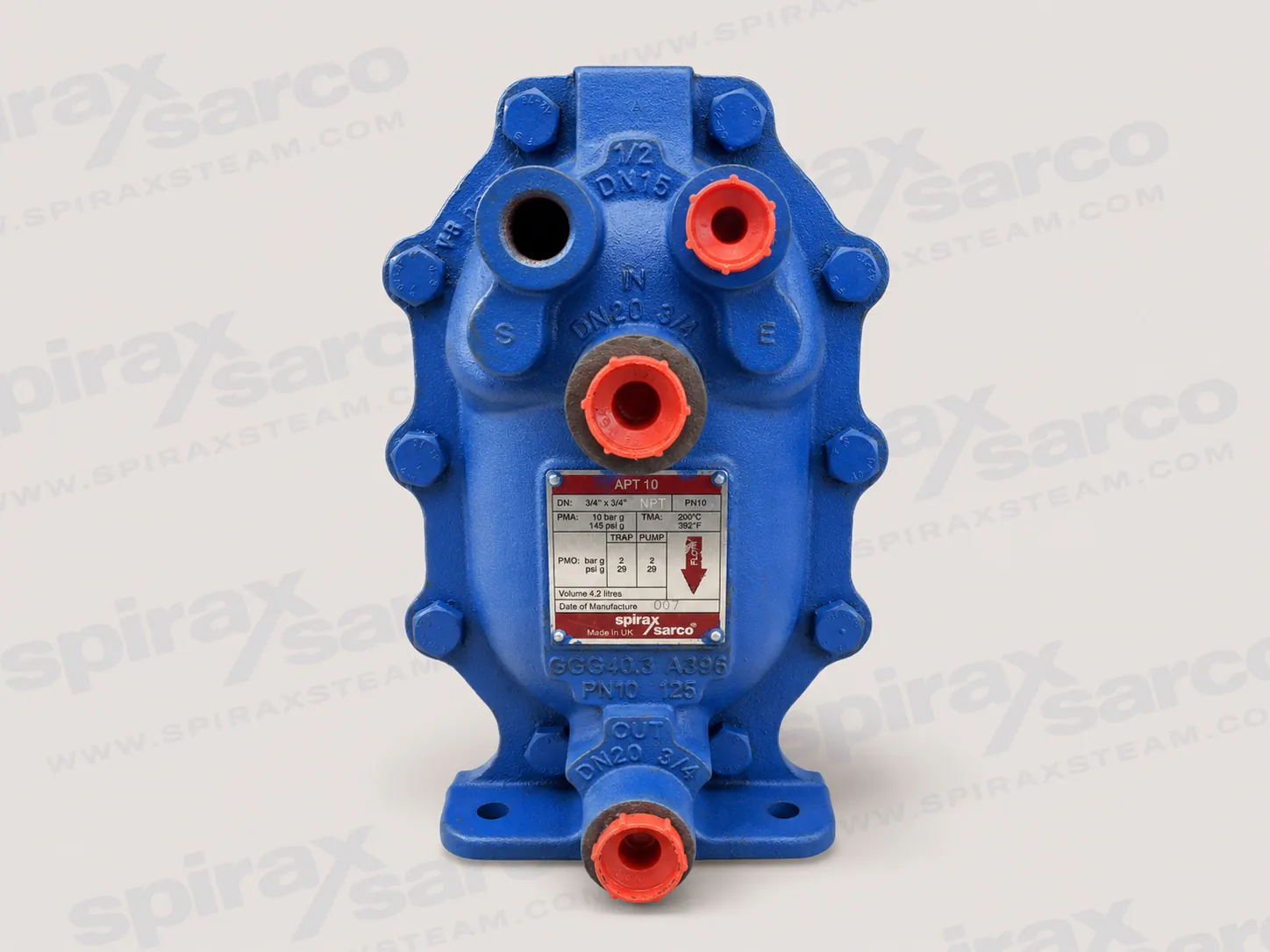
Steam-operated PN10 automatic pump trap that switches between trapping and pressure-powered condensate pumping for process and heating plant with low differential pressure, backpressure or vacuum.