Compare the wider check valve range
Return to the wider Spirax Sarco check valve range when DCV3 needs to be compared with lift, guided-disc, sanitary or other non-return valve options.

Pipeline ancillaries > Check valves
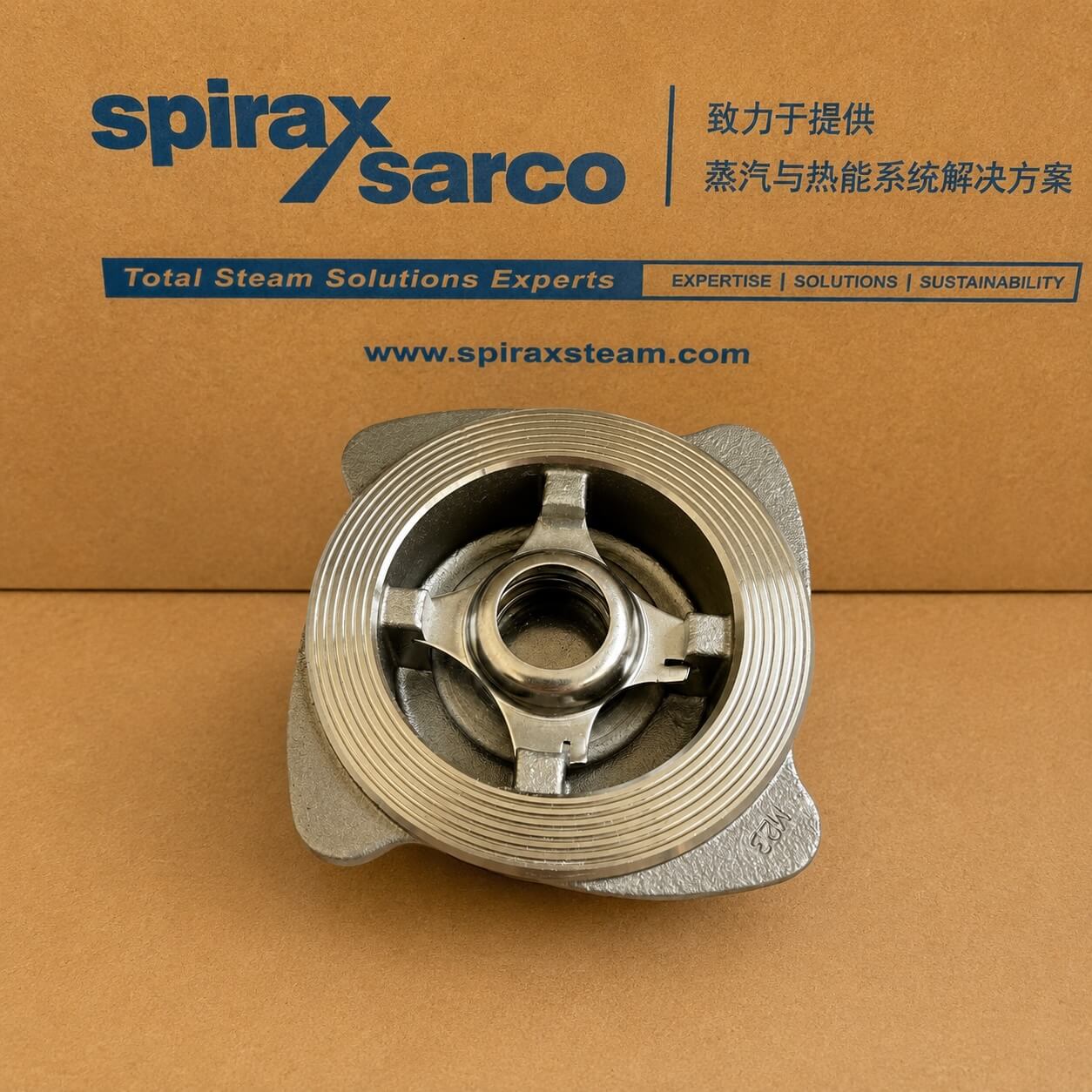
Spirax Sarco DCV3 Disc Check Valve
DCV3 is a Spirax Sarco wafer disc check valve for users who need compact non-return protection in steam, condensate, hot water and process pipework. The documented DCV3 route uses stainless steel construction and can be selected with seat and spring options to suit the duty.
Quick facts
The Spirax Sarco DCV3 disc check valve is a model-specific product path inside the wider steam check valves range. It is useful when the search or specification already names DCV3, or when the duty points toward a compact wafer non-return valve rather than a larger lift or swing check valve format.
Product documentation identifies DCV3 and DCV3LT as wafer disc check valves for process pipework, hot water, steam and condensate systems. The DCV3 material confirms a stainless steel body and disc, a metal-seat standard arrangement, and options including soft seats and different spring configurations.
The documented DCV3 size range runs from DN15 to DN100. Product documentation also shows the valve being fitted between multiple flange standards, including EN 1092, BS 10 and JIS routes, so the exact site flange standard should be checked before ordering.
DCV3 should be considered where the main problem is reverse flow, condensate fallback, gravity drain-down or equipment protection in a compact line space. In a steam or condensate system, the check valve decision often sits close to steam traps, pumps, flowmeters, control valves and isolation points rather than standing alone.
The general check valve guidance also matters here. Disc check valves use a spring-loaded disc that opens under forward flow and closes as differential pressure falls, helping close the valve before reverse flow develops. That design supports flexible installation orientation for spring-loaded disc check valves, but the final arrangement still needs to match the actual flow direction and duty.
The current DCV3 product documentation lists metal-seat, soft-seat and spring configuration choices. It also distinguishes the lower-temperature DCV3LT route from standard DCV3. Before final specification, confirm:
DCV3 selection normally sits inside a wider non-return protection decision that also includes line cleanliness, installation orientation and the equipment being protected.
Return to the wider Spirax Sarco check valve range when DCV3 needs to be compared with lift, guided-disc, sanitary or other non-return valve options.
Review strainers when pipe debris, scale or weld residue could damage valve seats, springs or downstream equipment in the same line.
Use Learn about Steam when the installation still needs checks around disc check valve operation, orientation, waterhammer risk and pressure drop.