การยกคอนเดนเสทและคอนเดนเสทปนเปื้อน
คำแนะนำสำหรับสถานการณ์พิเศษ รวมถึงการยกคอนเดนเสทไปยังท่อ return ระดับที่สูงกว่า และการจัดการกับคอนเดนเสทปนเปื้อน
การยกคอนเดนเสทจากท่อไอน้ำหลัก
การยกคอนเดนเสทจากท่อไอน้ำหลัก
บางครั้งจำเป็นต้องยกคอนเดนเสทจากกับดักไอน้ำไปยังท่อ return คอนเดนเสทระดับที่สูงกว่า (รูปที่ 14.5.1) คอนเดนเสทจะ rise up ท่อ lift เมื่อแรงดันต้นน้ำของกับดักสูงกว่าแรงดันท้ายน้ำของกับดัก แรงดันท้ายน้ำของกับดัก generally called backpressure และ made up of แรงดันใดๆ ที่ existing ในท่อคอนเดนเสท plus static lift caused by คอนเดนเสทในท่อ rising แรงดันต้นน้ำ will vary between start-up conditions when it is at its lowest and running conditions when it is at its highest Backpressure is related to lift โดย using conversion ประมาณต่อไปนี้: 1 metre lift in pipework = 1 m head static pressure ≅ 0.1 bar backpressure If head of 5 m produces backpressure of 0.5 bar then this reduces differential pressure available to push คอนเดนเสท through trap; although under running conditions reduction in trap capacity is likely to be significant only where low upstream pressures are used In steam mains at start-up steam pressure is likely to be very low and it is common for water to back-up before trap which can lead to waterhammer in space being drained To alleviate this problem at start-up liquid expansion trap fitted as shown in Figure 14.5.1 will discharge any cold คอนเดนเสท formed at this time to waste As steam main is warmed คอนเดนเสท temperature rises causing liquid expansion trap to close At same time steam pressure rises forcing hot คอนเดนเสท through ‘working’ drain trap to return line
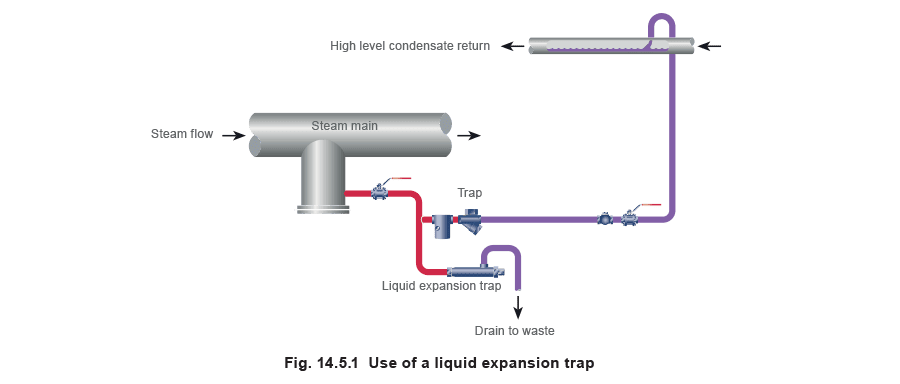
ท่อ discharge จากกับดักไปยังท่อ return overhead preferably discharges into top of main rather than simply feed to underside as shown in Figure 14.5.1 This assists operation because although riser is probably full of water at start-up it sometimes contains little more than flash steam once hot คอนเดนเสท under pressure passes through If discharge line were fitted to bottom of return line it would fill with คอนเดนเสท after each discharge and increase tendency for waterhammer and noise
It is also recommended that check valve be fitted after any steam trap from where คอนเดนเสท is lifted preventing คอนเดนเสท from falling back towards trap Above general recommendations apply not just to traps lifting คอนเดนเสท from steam mains but also to traps draining any type of process running at constant steam pressure Temperature controlled processes will often run with low steam pressures Rising คอนเดนเสท discharge lines should be avoided at all costs unless automatic pump-traps are used
คอนเดนเสทปนเปื้อน
คอนเดนเสทปนเปื้อน
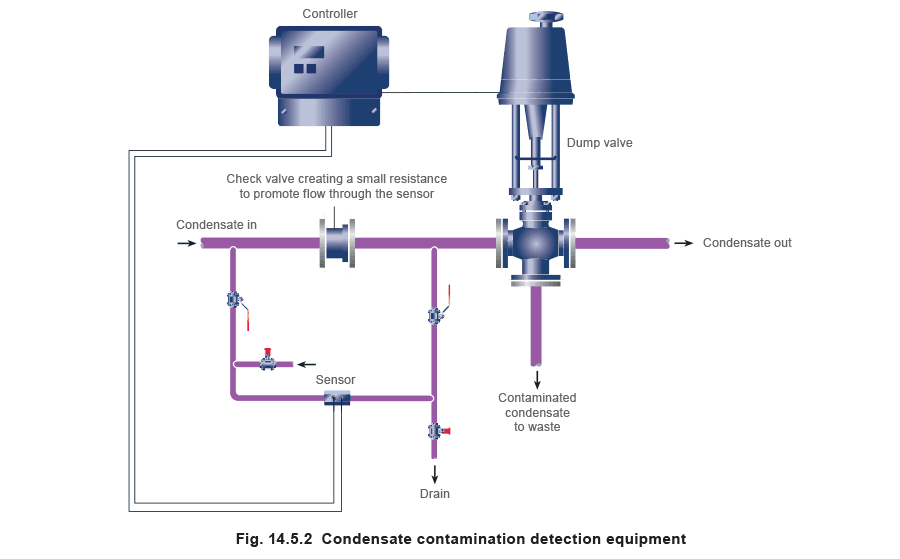
Occasionally คอนเดนเสท is discharged from sources where it might have become contaminated by corrosive process liquids This is unsuitable for boiler feedwater because of dangers of foaming scaling and corrosion which it can cause in boiler and distribution pipes However although contaminated คอนเดนเสท still carries same useful heat as clean คอนเดนเสท which could be recovered if proper contamination detection equipment were employed Such equipment detects changes in คอนเดนเสท conductivity When change from desired conductivity occurs then this may mean that คอนเดนเสท is contaminated Controller signals dump valve to open allowing คอนเดนเสท to flow to drain In some countries continuous monitoring of คอนเดนเสท is legal requirement