
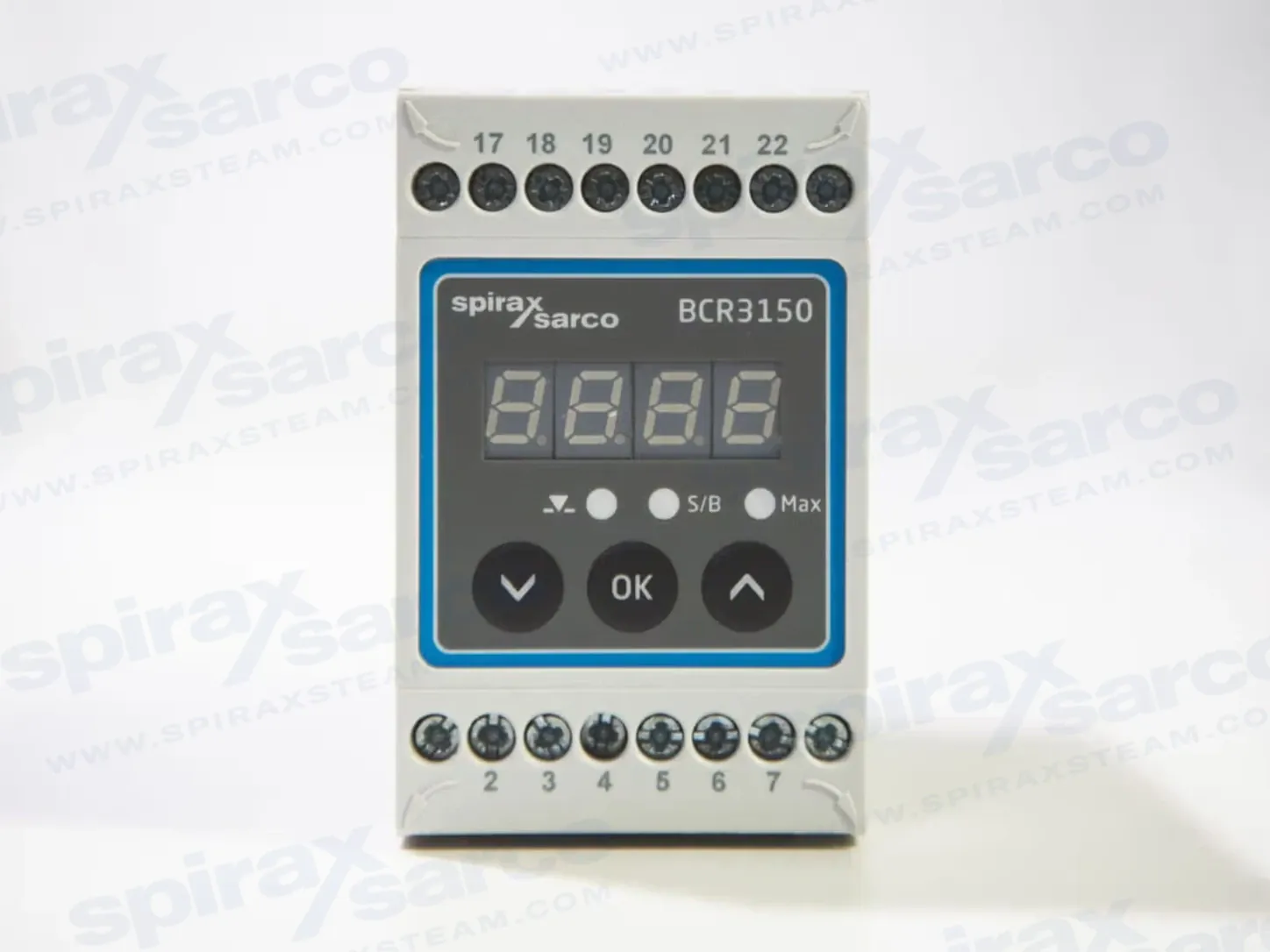
BCR3150
BCR3150 TDS Blowdown Controller
BCR3150 is a 24 Vdc conductivity-based TDS blowdown monitor and limiter for boiler-water control and compatible conductive condensate-contamination monitoring systems.
BCR3150 conductivity control for TDS blowdown
Spirax Sarco BCR3150 is an electronic TDS blowdown controller for conductivity-based monitoring and limiting duties. In a boiler blowdown system, conductivity is used as an indicator of the concentration of dissolved solids in the boiler water. Keeping that concentration within the operating policy set for the boiler helps the plant manage carryover risk, water quality and the amount of energy and treated water lost through blowdown. BCR3150 provides the controller element in that engineered system; it does not replace the conductivity probe, blowdown valve, sampling arrangement or the boiler operator's water-treatment programme.
The official electronic boiler controls range identifies BCR3150 as a monitor and limiter with a minimum input-signal conductivity of 10 µS/cm. This establishes a clear selection boundary. The controller is intended for conductive-water measurement applications where the complete probe and installation arrangement can provide an appropriate signal. It should not be selected solely from the controller name: the water chemistry, expected conductivity range, probe position, valve duty, control philosophy and applicable boiler rules must be established for the complete installation.
How the BCR3150 fits into a blowdown system
A conductivity-based TDS blowdown system links measurement, decision and discharge. The sensing element measures the conductive response of the water. The controller compares that information with the configured operating requirement and provides the monitoring or limiting function documented for the BCR3150. A separate blowdown valve and discharge system then handle the physical release of boiler water. Each part has a different duty, so controller selection cannot compensate for an incorrectly installed probe, unsuitable valve, undersized discharge route or an unverified set point.
This distinction also separates BCR3150 from a bottom-blowdown timer. Timed bottom blowdown removes settled solids by briefly opening a valve according to a schedule. TDS control responds to water conductivity and is associated with continuous or controlled surface blowdown. A boiler house can require both functions, but they need separate engineering decisions. The BCR3150 page therefore addresses conductivity-based TDS control rather than scheduled bottom blowdown.
The controller can also form part of a conductive condensate-contamination detection system. Official material pairs Spirax Sarco BCR3150 with the CP10 conductivity probe for this application. The system monitors returning condensate so that conductive contamination can be identified before unsuitable condensate is returned to the boiler feed system. The BCR3150 remains the controller; the CP10, sensor chamber, diversion arrangement and site response are separate system components that must be selected for the process.
Monitoring and limiting role
The documented monitor/limiter description is important when defining the required control philosophy. Monitoring provides the operator with information about the measured condition. A limiting function establishes a boundary response when the configured condition is reached. The final behaviour depends on the complete electrical and mechanical design, including how the controller output is connected to alarms and the blowdown or diversion valve. Because no exact-model installation manual was available for this review, output ratings, terminal assignments and commissioning steps are intentionally not inferred from adjacent controllers.
Automatic conductivity-based control can reduce dependence on inconsistent manual sampling and valve operation. Its practical value comes from repeatable measurement and a defined response, but automation does not determine the correct boiler-water limit by itself. The boiler manufacturer, water-treatment specialist and responsible site personnel must establish the operating range. Routine sampling, probe inspection and functional testing remain part of the operating regime.
Installation format and panel planning
BCR3150 is documented for DIN-rail mounting. Where the controller needs to be visible and adjustable from a control-cabinet door, the official range brochure identifies the BHC Panel Adaptor Small as the panel-mounting option. The controller enclosure is listed as IP40; the installed small panel adaptor provides IP65 protection in the documented panel-mounted arrangement. That conditional IP65 statement applies to the specified installation method and should not be treated as an unconditional rating for every cabinet or wiring arrangement.
The official product overview states a 24 Vdc supply with a tolerance of ±20% and power consumption of 4 W. Panel design must provide a compatible protected supply and should account for access, cable routing, separation from electrical interference and visibility of the controller. The system designer should obtain the current installation instructions before assigning terminals or commissioning the unit, because the available overview sources do not contain complete wiring data.
Valve and discharge-system considerations
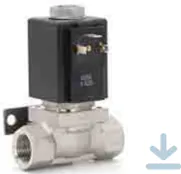
The controller is only one part of a safe blowdown installation. The selected valve must suit the medium, pressure, temperature, connection, actuator supply and required failure position. The downstream pipework and receiving system must safely handle hot pressurised discharge. Isolation, overcurrent protection, alarm handling and safe access must follow the applicable boiler-house rules. The BCV20 image below illustrates a separate blowdown-valve component shown with the controller in the official overview; it is not included in the BCR3150 controller specification and does not establish a universal valve selection.
Checks before requesting a quotation
- Define the duty. Confirm whether the application is boiler-water TDS blowdown or conductive condensate-contamination monitoring.
- Confirm the measurement range. Verify that the expected conductivity and selected sensing arrangement suit the documented minimum input conductivity of 10 µS/cm.
- Specify the complete system. Identify the conductivity probe, chamber or boiler connection, blowdown or diversion valve, actuator supply, discharge route and alarm response.
- Plan the panel. Provide a 24 Vdc supply within the documented tolerance, allow for 4 W consumption, and choose DIN-rail or the documented small panel-adaptor arrangement.
- Confirm environmental protection. Treat IP40 as the controller rating and apply IP65 only to the documented panel-mounted adaptor installation.
- Obtain current instructions. Verify wiring, output ratings, setup and testing against the current exact-model documentation before installation or commissioning.
When the measurement and valve system are correctly specified, the Spirax Sarco BCR3150 gives the boiler-house team a defined conductivity monitoring and limiting function in a compact controller. Reliable operation depends on the surrounding measurement, valve, electrical and water-treatment design. Quotation and commissioning should therefore be based on the complete duty rather than the controller model alone.
BCR3150 technical information
The following values are consolidated from official Spirax Sarco product-range overviews. They are suitable for preliminary selection but do not replace the current exact-model installation instructions.
| Product function | TDS blowdown monitor and limiter |
|---|---|
| Minimum input conductivity | 10 µS/cm |
| Supply | 24 Vdc ±20% |
| Power consumption | 4 W |
| Mounting | DIN rail, or panel mounting with BHC Panel Adaptor Small |
| Controller enclosure | IP40 |
| Documented panel-mounted protection | IP65 when installed with the specified small panel adaptor |
| Additional documented application | Conductive condensate-contamination monitoring when used in the documented CP10 system |
Information not established by the available sources
Exact terminal assignments, output ratings, alarm count, communications capability, wiring topology, commissioning sequence, maintenance procedure and fault codes were not available in an exact-model technical or installation document. These details must be checked against the current BCR3150 instructions supplied for the installation.